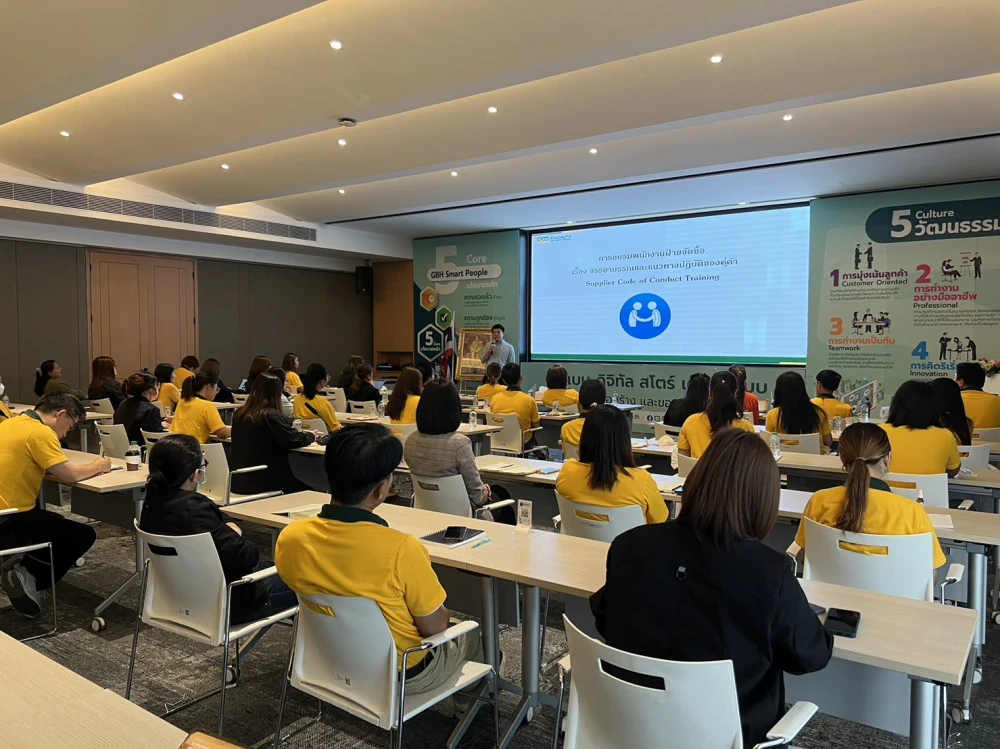


Sustainable Supply Chain Management
Supporting the SDGs Goals
SDGs
Goal 12:

Goal 13:

Goal 17:
Goal and Performance Highlights
Performance Highlights


Challenges and Opportunities
Commitment
The Company is committed to efficient Supply Chain Management, covering the entire process from sourcing and warehouse management to nationwide distribution and delivery to customers at all stores. By systematically integrating sustainable development principles into operational processes, the Company supports business growth while creating long-term economic, social, and environmental value.

Management Approach and Value Creation
Management Approach
The Company places importance on selecting and developing partners who uphold standards in quality, labor safety, business ethics, and environmental responsibility. Digital technologies are adopted in warehouse management and distribution to enhance efficiency, reduce costs, optimize resource utilization, and minimize environmental impacts throughout the supply chain.
Sustainable Supply Chain Management Operations are as follows:
- Responsible Sourcing: Suppliers were screened and assessed based on product quality, manufacturing standards, occupational health and safety practices, compliance with relevant legal requirements, and environmental responsibility. A technology-driven supplier relationship management system provided by Global Soft enhances transparency, promotes fairness, and supports continuous supplier development.
- Efficient Warehouse Management: Wang Noi Distribution Center serves as the central logistics hub, supported by a Warehouse Management System (WMS) and an Automated Storage and Retrieval System (ASRS). These technologies improve inventory accuracy, reduce losses, optimize space utilization, and enhance energy efficiency across logistics operations.
- Environmentally Friendly Transportation: A Smart Route Planning System implemented by GBH Logistics reduces travel distance, fuel consumption, and greenhouse gas emissions, while efficiently managing vehicles to increase the utilization rate per trip and enhance overall fleet performance.
- Digital Technology and Data Analytics: An integrated IT infrastructure connects Enterprise Resource Planning (ERP), Warehouse Management Systems (WMS), Point-of-Sale (POS) systems, and other digital platforms to provide real-time supply chain visibility and coordination. These technologies support accurate demand forecasting, efficient stock management, and effective strategic decision-making.
- Supplier Engagement and Development: The Company communicates sustainability expectations and sustainability operational guidelines to suppliers to support development in governance, human rights, occupational health and safety, and environmental responsibility. This approach strengthens supplier capabilities and competitiveness, ensures continuous engagement, and creates long-term sustainable value across the supply chain.
Sustainable Supply Chain Management System
The Company has implemented a structured sustainable supply chain management framework to ensure that stakeholders and suppliers operate in accordance with sustainability standards. The Board of Directors has assigned responsibility to the Sustainability and Corporate Governance Committee, which is responsible for supplier selection, supplier contract management, supplier assessment, and supplier development. Environmental, Social, and Governance (ESG) considerations are integrated into procurement processes, and significant suppliers undergo regular assessments through desk assessments and on-site assessments to verify compliance with labor practices, human rights, occupational health and safety, environmental management, and business ethics standards, with corrective action plans systematically monitored to ensure continuous improvement and compliance.
The Company has developed internal capabilities through ESG training programs for employees involved in procurement processes and relevant stakeholders to enhance supply chain risk management. In addition, the Company conducts ESG performance benchmarking among suppliers to raise standards, promote positive motivation, and foster long-term collaboration across the supply chain, thereby supporting long-term organizational competitiveness and sustainability.
Supplier Selection
Procurement is an important process to fix expenses and quality of products and services. Thus, the Company must have a procedure that provide the highest benefits with fairness, reasonableness, transparency, and accountability. In addition, the Company must give importance to mutually beneficial suppliers and strengthen relationships with them based on respect and trust.
The Company emphasizes the importance of selecting suitable suppliers through a fair and equitable process based on established criteria. It prioritizes collaboration with business partners, manufacturers, and contractors (“Suppliers”) who uphold ethical practices, respect human rights, and demonstrate social, community, and environmental responsibility. To affirm the Company’s commitment to sustainable business operations, the selection criteria requires the Suppliers to adhere to economic, environmental, and social (ESG) dimensions as follows :
- Maintain a reliable financial history and demonstrate potential for long-term growth alongside the Company.
- Ensure manufacturing processes are socially and environmentally responsible, complying with legal requirements, including the prohibition of human rights violations, illegal labor and labor exploitation, and environmental destruction.
- Manufacture or distribute high-quality products with mechanisms in place for quality verification.
- Deliver products in the agreed-upon quantities and timelines.
- Provide support for sales promotion initiatives and offer reliable after-sales service to customers.
- Collaborate with the Company by providing product samples, quotations, and other relevant information, including alignment with the Supplier Code of Conduct which encompasses business ethics, labor and human rights, occupational health and safety, environmental responsibility, and compliance with applicable laws and regulations.
Corrective Action Measures of Supplier Non-Compliance
- Negotiation for issue resolution with a clearly defined scope and timeline.
- Issuance of verbal and written warnings.
- Termination of the trade agreement.
- Filing of a claim for damages
Supplier Risk Management
The Company conducts risk assessments for both existing and new Suppliers. This operation involves analyzing their trade data and considering essential information such as the number of Suppliers, product groups purchased, order values, and Suppliers’ locations, all of which are utilized to evaluate workflows and manage supply chain risks.
Purchasing Information of Suppliers
| Product Sources | Number (names) | Rate (percent) |
|---|---|---|
| Thailand | 693 | 81.15 |
| Oversea | 161 | 18.85 |
Suppliers are identified and categorized with the criteria based on purchase volume and the difficulty of finding substitute products. This is to find out which of them are Significant Suppliers for the Company to be able to use such information for risk management.
- Significant Supplier refers to suppliers with high purchase volumes and products that are difficult to substitute. These suppliers are categorized as High Risk Tier 1 Supplier and must undergo a Supplier Evaluation every year.
- Non-Significant Supplier refers to suppliers with medium or low purchase volumes and medium or low risk, not categorized as High Risk Tier 1 Supplier
Based on the criteria for categorizing suppliers and assessing risks, Tier 1 suppliers are defined as those that conduct direct transactions or engage in the purchase and trade of products with the Company. Non-Tier 1 suppliers are referred to as secondary suppliers that do not engage in direct transactions with the Company. In 2025, according to these criteria, the Company engaged only with Tier 1 suppliers and had no Non-Tier 1 suppliers. The supplier risk assessment also confirmed that no significant economic risks were identified within the supplier base.
Governance and ESG Supplier Assessment
The Company has established a systematic ESG governance and risk management framework across its supply chain, beginning with the identification and ESG risk-based screening of suppliers. This enables the Company to appropriately develop the Supplier Assessment and Development Plan. Significant suppliers are required to complete an annual ESG Self-Declaration through the Global Soft system. In addition, the Merchandise Department conducts On-site ESG Audits to verify compliance with labor standards, human rights, occupational health and safety requirements, environmental regulations, and business ethics. Where deficiencies are identified, the Company follows up on the development and implementation of a Corrective Action Plan to ensure that appropriate remedial actions are taken.
Furthermore, the Company comprehensively considers other risk factors that may affect the supply chain, including:
- Country-specific Risk: Such as Economic Environment Risks, government policies, and political stability.
- Industry-specific Risk: Such as Risks from Industry Competition, changes in consumer behavior, technological innovation, and inventory management.
- Commodity-specific Risk: Such as risks related to product quality, price volatility, and resource scarcity.
Supplier Development
The Company continuously supports supplier capability development under sustainable supply chain management framework by implementing a Vendor Managed Inventory (VMI) system in collaboration with suppliers. This system enhances inventory management efficiency, reduces waste, and strengthens the ability to respond effectively to customer demand in each location.
The VMI system enables suppliers to access real-time sales and inventory data at each stores, allowing for more accurate production planning, delivery scheduling, and promotional activities. As a result, it helps reduce excess inventory, minimize stock shortages, and improve resource utilization throughout the supply chain. This approach enhances long-term collaboration with suppliers, strengthens the competitiveness for both the Company and suppliers, and supports sustainable growth across the Company’s overall supply chain.
Green Procurement
The Company recognizes that Green Procurement is a process or activity that reflects its responsibility towards society and the environment. Since procurement is a crucial process for all businesses, it plays a significant role in reducing environmental impact
The Company supports Green Procurement with a commitment to promoting the procurement of eco - friendly equipment, tools, and vehicles to minimize environmental impacts from its operations. This includes sourcing eco-friendly products and services to encourage responsible consumption and meet the demands of customers who prefer environmentally friendly products. The details are as follows:
- Procurement of Environmentally Friendly Equipment, Tools, and Vehicles
- The procurement of electric forklifts for new stores has been implemented since 2020, replacing gas and oil forklifts, as well as for existing stores where forklifts have reached the end of their service life. Electric forklifts operate with minimal environmental impact, eliminating noise, odor, and air pollution.
- The procurement of electric stackers has been conducted for the purpose of moving products within the retail areas of all stores.
- There is a policy to procure hybrid vehicles for executives, as they are more environmentally sustainable than conventional fuel-powered vehicles.
- Sourcing environmentally sustainable products and services to support and address customer needs, the Company has established ESG product categories. These include energy-saving products, products aimed at reducing global warming, natural resource conservation products, health-promoting products, items designed for the elderly and disabled, and products tailored to accommodate the new way of life.
Training to Enhance Procurement Officers’ Competencies
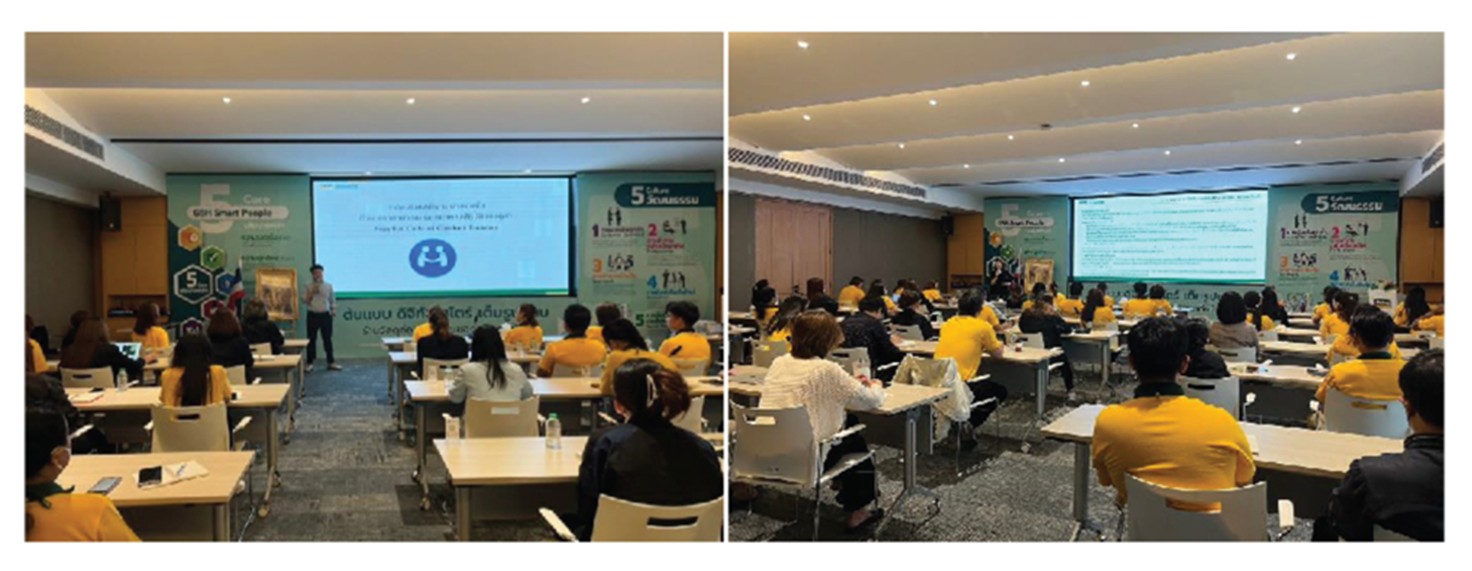
The Company conducts training programs to enhance the competencies of procurement officers and ensure they can adapt effectively to organizational changes. These programs cover key areas such as policy communication, ethical standards, partner guidelines, procurement practices, and the integration of information technology systems. The objective is to systematically and appropriately improve operational efficiency, enabling procurement processes to be executed accurately, quickly, and effectively by applying knowledge and technology.
Key Performance in 2025
| Supplier Classification Details | 2023 | 2024 | 2025 |
|---|---|---|---|
| Tier-1 Supplier | 875 | 1,058 | 854 |
| Significant Tier-1 Supplier | 38 | 36 | 37 |
| Non-Significant Tier-1 Supplier | 837 | 1,022 | 817 |
| % of total spend on significant suppliers in Tier-1 | 54.21% | 50.92% | 52.25% |
| 2023 | 2024 | 2025 | |
|---|---|---|---|
| Supplier Self-Declaration Response Rate for Sustainability Assessment | 71.99% | 40.51% | 63.06% |
| Numbers of domestic suppliers passed with desk-assessments | 491 (out of 682 suppliers) | 316 (out of 780 suppliers) | 437 (out of 693 suppliers) |
| Percent of Significant Tier 1 suppliers assessed | 84% | 67% | 100% |
| Numbers of High-Risk Tier 1 Suppliers | 4 | 0 | 0 |
| Numbers of suppliers with ON SITE AUDIT | 5 | 5 | 3 |
| Number of suppliers informed of Supplier Code of Conduct | 100% | 100% | 100% |
| Number of suppliers informed of Anti-Corruption Policy | 100% | 100% | 100% |